
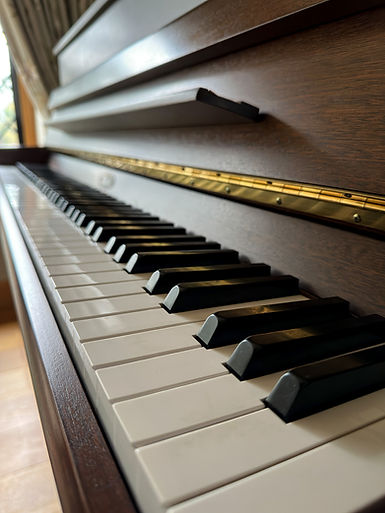
Piano Tuning
Every piano responds differently, and each instrument needs an individual approach.
My tuning work is careful and tailored, taking into account the piano’s pitch, stability, scale and musical character. Rather than rushing through a standard visit, I take time to understand the instrument properly and work to bring out the best possible sound from it.
Whether your piano is regularly maintained, has recently been moved, or has been left too long between tunings, I offer patient, high-standard work with complete focus, time and expertise.

Regular Tuning & Ongoing Care
Most pianos benefit from tuning at least twice a year, although some instruments need more frequent attention depending on their age, condition, environment and level of use.
More regular tuning may be advisable where there are changes in temperature or humidity, where a piano is older or less stable, or where it is used regularly for teaching, practice or performance.
Regular tuning helps maintain pitch, stability and the best possible sound from the instrument.

Pitch Correction & Stabilisation
If a piano has been left too long between tunings, it may have fallen significantly below pitch or lost overall stability. In these cases, a standard tuning alone is often not enough.
Pitch correction helps return the piano to a more stable and usable level, usually before a finer tuning is carried out. In some cases, the work is best done over more than one visit to achieve the most reliable result.

Period Tuning & Care for Square & Early Pianos
I offer specialist tuning and care for early keyboard instruments, including square pianos, fortepianos and harpsichords.
Where appropriate, I use historical temperaments and a careful, informed approach that respects the character, age and original musical intentions of the instrument. This work is tailored to the needs of both original instruments and well-made replicas.

Piano Regulation & Service
Regulation and servicing go beyond tuning alone, focusing on how the piano feels and responds under the fingers.
This work involves adjusting the action and related mechanical parts so the instrument plays more evenly, feels more responsive and performs more consistently across the keyboard. It is especially valuable where a piano feels uneven, sluggish, noisy or less controlled than it should.
In some cases, regulation is needed because parts have worn over time. In others, a piano may simply never have been properly set up to realise its full potential.
Piano Voicing
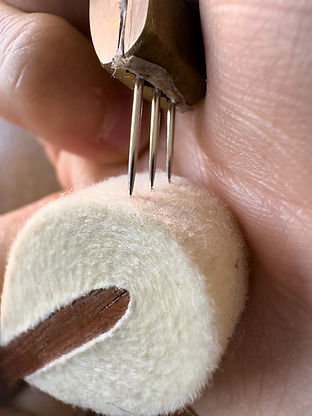
Voicing is the process of refining tone by adjusting the condition and response of the hammer felt.
Over time, some notes can become brighter, harsher or less even than others. Careful voicing helps create a more balanced, consistent and musical tone across the keyboard.
This is often best carried out alongside regulation and other service work, depending on the condition of the piano.

Piano Care
Good piano care helps preserve tone, stability and long-term condition.
Temperature and humidity changes, dust, wear and general environment can all affect how a piano performs over time. Sensible care and regular maintenance help protect both the structure and the action of the instrument.
I can also advise on the best ways to care for your piano between visits.

Professional Piano Cleaning
A careful internal clean helps protect the instrument and allows developing problems to be spotted earlier.
Dust, debris and environmental build-up can affect both condition and performance over time. Cleaning the action, soundboard and interior can be a valuable part of longer-term piano care, particularly for instruments that have been left unattended for years.

Piano Life Saver
Changes in humidity can affect tuning stability, tone and the long-term health of a piano.
The Piano Life Saver system helps create a more consistent environment inside the instrument, improving stability and helping protect it from the effects of excessive dryness or damp. It can be especially valuable where room conditions fluctuate through the year.